
Brownie Company of Great Britain Marconi Era Crystal Radio Wireless BBC 1920s
$ 5.26
Description
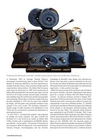
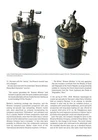
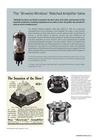
The first Brownie wireless receivers were introduced in early 1923, shortly after the start of broadcasting in Great Britain. Manufactured by J.W.B. Wireless Supplies, they were crude, low-cost crystal sets catering to the growing number of “listeners-in” looking for an inexpensive way to tune into the British Broadcasting Company’s local transmitting stations which were opening up around the country. The new enterprise took its name from its founder’s initials – James William Barber. The Brownie Wireless Company was incorporated in 1925, absorbing J.W.B. Wireless and with Barber as Managing Director. Barber received the C.B.E. for his contribution to cinematography as a propaganda medium during the First World War, and went on to become influential in the developing home cinema industry at the end of hostilities. In the early 1920s, he turned his attention to the new field of domestic wireless. Brownie Wireless pioneered the use of moulded receiver cases, in contrast to the classic polished mahogany and walnut cabinets then in vogue. And in a noteworthy patent dispute with the dominant Marconi Company, Brownie Wireless, led by Barber, succeeded in reducing royalties on radio receivers for the industry as a whole. Brownie Wireless produced a range of innovative wireless receivers and accessories for the next several years, but in the face of fierce competition, the Company ceased operations in 1933. For some reason virtually no records of the Company have survived. In addition to his leadership of Brownie Wireless, Barber served as Chairman of both the British Plastic Moulding Trade Association and Radio Manufacturers Association for several years and was Technical Advisor to the British Cinema Exhibitors’ Association. Barber’s legacy, in cinematography and radio, has gone largely unrecognised, as has the role of the Brownie Wireless Company in Britain’s early radio industry of the 1920s and 30s. Crystal detector radio. Tube, valve radio. Early cinema. Moving pictures. Domestic wireless broadcasting. BBC. Marconi era wireless.