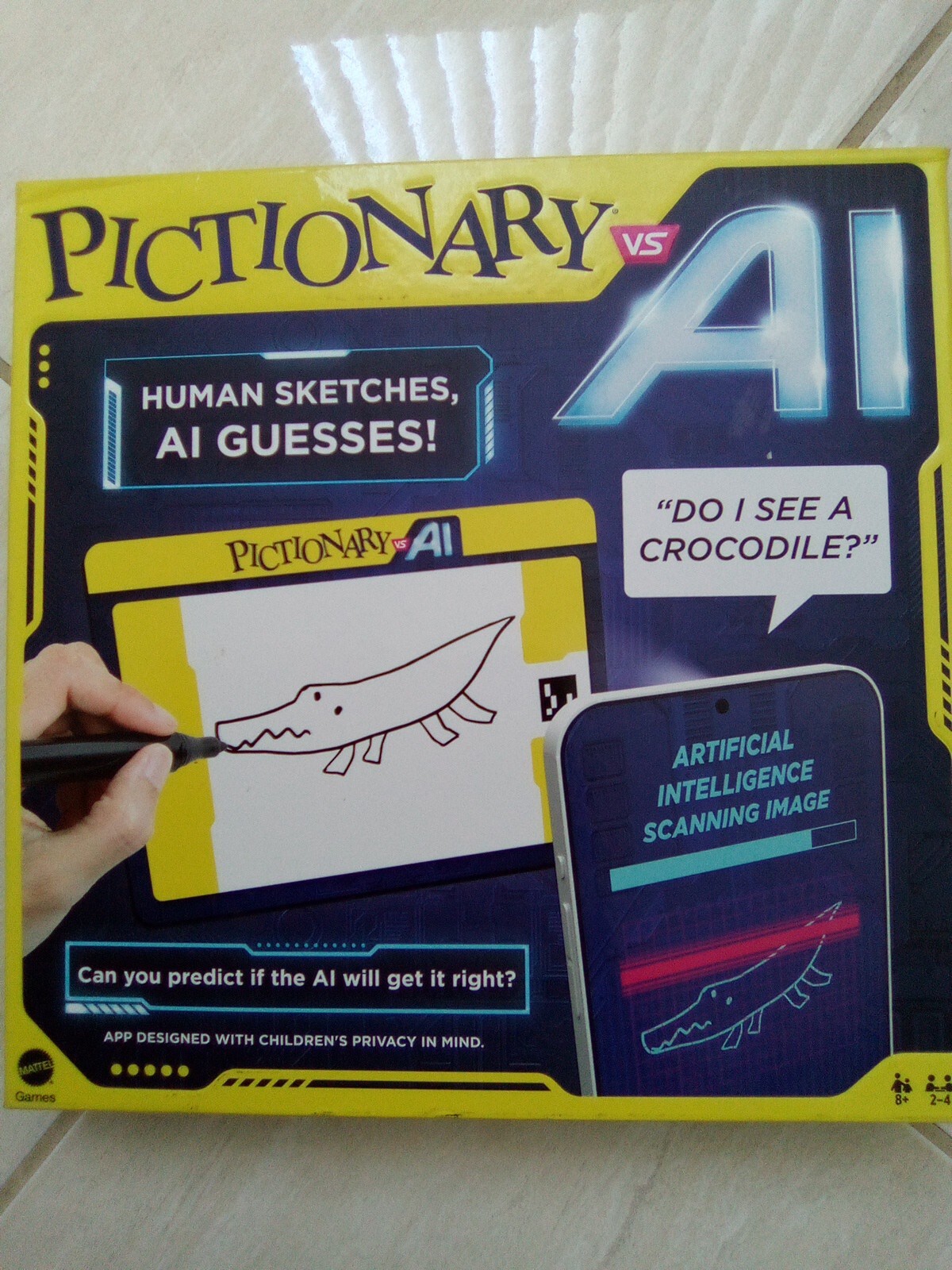

NEW GOOD GIFT-FUN **PICTIONARY vs AI/Mattel Games designed with children.
$ 6.87
Description
When comparing Pictionary (a classic board game) and AI-powered or tech-enhanced versions of games like Mattel Games , we can look at how they are designed for children, focusing on creativity, engagement, and learning. 1. Pictionary (Classic vs. AI Versions) Classic Pictionary : Objective : Players draw clues to help their team guess a word or phrase. It encourages creativity, team collaboration, and communication skills. Target Audience : While Pictionary is suitable for a wide age range, the classic version is designed for children aged 8 and up. The difficulty of the words can be adjusted based on the players' ages and skill levels. Learning Benefits : It helps with vocabulary, artistic skills (drawing), and teamwork. It also encourages quick thinking, creativity, and problem-solving in a fun and social setting. AI-Enhanced or Digital Versions (Mattel Games) : Objective : Similar to the classic, but these versions often include AI components that could adjust difficulty levels based on the player's performance. The AI can even provide automatic guesses or track progress, enhancing the game’s dynamic nature. Target Audience : These digital versions can be more engaging for children who are used to interacting with technology. They are designed for various age groups, often with simplified modes for younger kids. Learning Benefits : These versions may focus more on tech-related skills, including interacting with AI, understanding basic programming principles, and possibly improving visual recognition skills. 2. Mattel Games Designed for Children (with AI Elements) Mattel, a well-known game company, has been incorporating AI and digital elements into their games, making them more interactive and appealing to the tech-savvy generation. Some examples include: Mattel's AI-Powered Games (e.g., AI-Enhanced Uno ): Objective : Traditional games like Uno have been digitized, and AI features can provide smarter gameplay, adjust difficulty, or offer challenges that make the game more engaging. Target Audience : Games like these are often designed for children aged 6 and up, with options to customize game play through difficulty levels. Learning Benefits : These games can improve strategic thinking, pattern recognition, and adaptability. AI systems can also help reinforce good decision-making by offering feedback on choices. Interactive & Tech-Savvy Board Games : These games often incorporate voice assistants, smart cards, and motion sensors to create a more immersive experience. Target Audience : Many of these games are aimed at children aged 5-12, depending on the complexity of the game mechanics. Learning Benefits : They encourage children to use their problem-solving skills, work with technology, and learn concepts like cause and effect. 3. Key Differences in Design for Children Creativity & Imagination : Pictionary encourages open-ended creativity, allowing kids to express themselves freely through drawing. While the AI versions may have some creative components, the emphasis on freehand drawing is more prominent in the classic game. AI versions of games like Uno or Pictionary may limit the need for imagination by automating some parts of gameplay (e.g., the guessing process in digital Pictionary). Social Interaction : Classic Pictionary is ideal for promoting face-to-face interaction, teamwork, and social skills. It's a highly interactive game where kids have to communicate and collaborate. AI-Enhanced Versions : While they may have multiplayer features, they often focus on solo play or less social interaction, as AI can take over roles that would traditionally require human players. Learning Through Play : Pictionary fosters creative thinking, quick reflexes, and teamwork. AI/Tech Games often add a layer of learning about technology and interacting with digital systems. They may also enhance learning about rules, structures, and new forms of decision-making that are powered by AI. Conclusion Pictionary remains a timeless, fun, and educational game for children that focuses on creativity, teamwork, and problem-solving through drawing and guessing. Mattel's AI and Tech-Enhanced Games (like AI-powered Uno or interactive versions of classic games) introduce children to new forms of play and learning, combining traditional board game elements with modern technology. These games tend to be more tech-forward and may appeal to kids who are familiar with digital interfaces and enjoy dynamic, automated experiences. Both types of games offer unique benefits depending on what you're looking for. Pictionary excels in fostering creative expression and team collaboration, while AI-powered Mattel games provide an interactive tech experience, helping children engage with new technologies while still offering educational value.