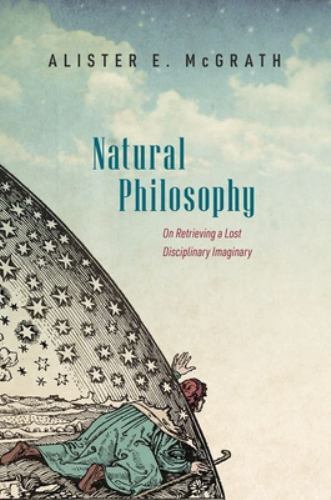
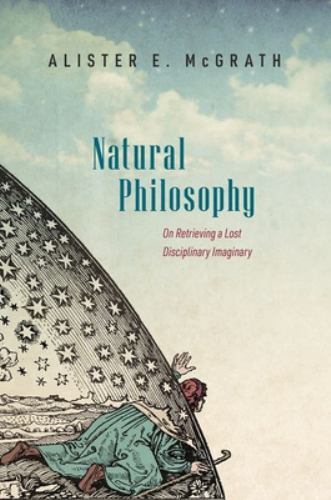
Rediscovering Natural Philosophy by Alister McGrath 2023 Hardcover

$ 28.05

Author: Alister Mcgrath Table Of Content: Introduction: On Retrieving Natural PhilosophyPart One: A Critical Conversation with the Tradition1. The Origins of Natural Philosophy: Aristotle2. The Consolidation of Natural Philosophy: The Middle Ages3. Skywatching: The Natural Philosophy of Copernicus, Kepler, and Galileo4. English Natural Philosophy: Bacon, Boyle, and Newton5. The Parting of the Ways: From Natural Philosophy to Natural SciencePart Two: A Reconceived Natural Philosophy: Exploring a Disciplinary Imaginary6. Reconceiving Natural Philosophy: Laying the Foundations7. Theory: The Contemplation of Nature8. Objectivity: Understanding the External World9. Subjectivity: An Affective Engagement with Nature10. Natural Philosophy: Recasting a VisionAcknowledgementsWorks ConsultedIndex Intended Audience: Trade Publisher: Oxford University Press, Incorporated Dewey Decimal: 113 Item Width: 6.5 in gtin13: 9780192865731 Genre: Philosophy, Science Reviews: "An engaging account... highly recommended" -- Choice Reviews"In my opinion, this is McGrath's most important work to date, and might even be a candidate of 21st century classics." -- Michael Borowski, Reviews in Science, Religion and Theology"A significant scholarly contribution" -- David Lorimer, Paradigm Explorer"important and elegantly argued book by one of today's most prolific and engaging theologians...[McGrath's] clear and accessible style testifies to his skill as an exemplary communicator." -- John Saxbee, Church Times"This book is a significant scholarly contribution to a wider and deeper worldview affirming science, philosophy, ethics and aesthetics within a reimagined natural philosophy." -- David Lorimer, Journal Of The Scientific And Medical Network"In this book, Alister McGrath provides an intellectual history and critique of what is now referred to as natural science, as well as a proposed re-conception of science going forward...The book has two parts. In Part 1, McGrath successfully labors to give an accessible introduction to the historical conception and development of natural philosophy and its trajectory/transformation towards contemporary "science," followed in Part 2 by a proposed direction out of the predicament which he and others see modern/postmodern science to be in." -- Alexander Fogassy, DPhil Candidate, Oriel College, University of Oxford, Oxford, UK OX1 4EW., Perspectives on Science and Christian Faith"it's an engaging account that readers not well versed in the history will find informative... Highly recommended. Upper-division undergraduates. Graduate students, faculty, and professionals. General readers." -- Choice"Natural Philosophy, with its 60-page bibliography, is a timely ressourcement for a goal beyond science or religion." -- Science & Christian Belief, "An engaging account... highly recommended" -- Choice Reviews "In my opinion, this is McGrath's most important work to date, and might even be a candidate of 21st century classics." -- Michael Borowski, Reviews in Science, Religion and Theology "A significant scholarly contribution" -- David Lorimer, Paradigm Explorer "important and elegantly argued book by one of today's most prolific and engaging theologians...[McGrath's] clear and accessible style testifies to his skill as an exemplary communicator." -- John Saxbee, Church Times "This book is a significant scholarly contribution to a wider and deeper worldview affirming science, philosophy, ethics and aesthetics within a reimagined natural philosophy." -- David Lorimer, Journal Of The Scientific And Medical Network "In this book, Alister McGrath provides an intellectual history and critique of what is now referred to as natural science, as well as a proposed re-conception of science going forward...The book has two parts. In Part 1, McGrath successfully labors to give an accessible introduction to the historical conception and development of natural philosophy and its trajectory/transformation towards contemporary "science," followed in Part 2 by a proposed direction out of the predicament which he and others see modern/postmodern science to be in." -- Alexander Fogassy, DPhil Candidate, Oriel College, University of Oxford, Oxford, UK OX1 4EW., Perspectives on Science and Christian Faith "it's an engaging account that readers not well versed in the history will find informative... Highly recommended. Upper-division undergraduates. Graduate students, faculty, and professionals. General readers." -- Choice, "In my opinion, this is McGrath's most important work to date, and might even be a candidate of 21st century classics." -- Michael Borowski, Reviews in Science, Religion and Theology "important and elegantly argued book by one of today's most prolific and engaging theologians...[McGrath's] clear and accessible style testifies to his skill as an exemplary communicator." -- John Saxbee, Church Times, "In my opinion, this is McGrath's most important work to date, and might even be a candidate of 21st century classics." -- Michael Borowski, Reviews in Science, Religion and Theology "A significant scholarly contribution" -- David Lorimer, Paradigm Explorer "important and elegantly argued book by one of today's most prolific and engaging theologians...[McGrath's] clear and accessible style testifies to his skill as an exemplary communicator." -- John Saxbee, Church Times "This book is a significant scholarly contribution to a wider and deeper worldview affirming science, philosophy, ethics and aesthetics within a reimagined natural philosophy." -- David Lorimer, Journal Of The Scientific And Medical Network "In this book, Alister McGrath provides an intellectual history and critique of what is now referred to as natural science, as well as a proposed re-conception of science going forward...The book has two parts. In Part 1, McGrath successfully labors to give an accessible introduction to the historical conception and development of natural philosophy and its trajectory/transformation towards contemporary "science," followed in Part 2 by a proposed direction out of the predicament which he and others see modern/postmodern science to be in." -- Alexander Fogassy, DPhil Candidate, Oriel College, University of Oxford, Oxford, UK OX1 4EW., Perspectives on Science and Christian Faith, "In my opinion, this is McGrath's most important work to date, and might even be a candidate of 21st century classics." -- Michael Borowski, Reviews in Science, Religion and Theology "important and elegantly argued book by one of today's most prolific and engaging theologians...[McGrath's] clear and accessible style testifies to his skill as an exemplary communicator." -- John Saxbee, Church Times "This book is a significant scholarly contribution to a wider and deeper worldview affirming science, philosophy, ethics and aesthetics within a reimagined natural philosophy." -- David Lorimer, Journal Of The Scientific And Medical Network, important and elegantly argued book by one of today's most prolific and engaging theologians...[McGrath's] clear and accessible style testifies to his skill as an exemplary communicator., "In my opinion, this is McGrath's most important work to date, and might even be a candidate of 21st century classics." -- Michael Borowski, Reviews in Science, Religion and Theology "A significant scholarly contribution" -- David Lorimer, Paradigm Explorer "important and elegantly argued book by one of today's most prolific and engaging theologians...[McGrath's] clear and accessible style testifies to his skill as an exemplary communicator." -- John Saxbee, Church Times "This book is a significant scholarly contribution to a wider and deeper worldview affirming science, philosophy, ethics and aesthetics within a reimagined natural philosophy." -- David Lorimer, Journal Of The Scientific And Medical Network "In this book, Alister McGrath provides an intellectual history and critique of what is now referred to as natural science, as well as a proposed re-conception of science going forward...The book has two parts. In Part 1, McGrath successfully labors to give an accessible introduction to the historical conception and development of natural philosophy and its trajectory/transformation towards contemporary "science," followed in Part 2 by a proposed direction out of the predicament which he and others see modern/postmodern science to be in." -- Alexander Fogassy, DPhil Candidate, Oriel College, University of Oxford, Oxford, UK OX1 4EW., Perspectives on Science and Christian Faith "it's an engaging account that readers not well versed in the history will find informative... Highly recommended. Upper-division undergraduates. Graduate students, faculty, and professionals. General readers." -- Choice, "In my opinion, this is McGrath's most important work to date, and might even be a candidate of 21st century classics." -- Michael Borowski, Reviews in Science, Religion and Theology "important and elegantly argued book by one of today's most prolific and engaging theologians...[McGrath's] clear and accessible style testifies to his skill as an exemplary communicator." -- John Saxbee, Church Times "This book is a significant scholarly contribution to a wider and deeper worldview affirming science, philosophy, ethics and aesthetics within a reimagined natural philosophy." -- David Lorimer, Journal Of The Scientific And Medical Network "In this book, Alister McGrath provides an intellectual history and critique of what is now referred to as natural science, as well as a proposed re-conception of science going forward...The book has two parts. In Part 1, McGrath successfully labors to give an accessible introduction to the historical conception and development of natural philosophy and its trajectory/transformation towards contemporary "science," followed in Part 2 by a proposed direction out of the predicament which he and others see modern/postmodern science to be in." -- Alexander Fogassy, DPhil Candidate, Oriel College, University of Oxford, Oxford, UK OX1 4EW., Perspectives on Science and Christian Faith, "An engaging account... highly recommended" -- Choice Reviews"In my opinion, this is McGrath's most important work to date, and might even be a candidate of 21st century classics." -- Michael Borowski, Reviews in Science, Religion and Theology"A significant scholarly contribution" -- David Lorimer, Paradigm Explorer"important and elegantly argued book by one of today's most prolific and engaging theologians...[McGrath's] clear and accessible style testifies to his skill as an exemplary communicator." -- John Saxbee, Church Times"This book is a significant scholarly contribution to a wider and deeper worldview affirming science, philosophy, ethics and aesthetics within a reimagined natural philosophy." -- David Lorimer, Journal Of The Scientific And Medical Network"In this book, Alister McGrath provides an intellectual history and critique of what is now referred to as natural science, as well as a proposed re-conception of science going forward...The book has two parts. In Part 1, McGrath successfully labors to give an accessible introduction to the historical conception and development of natural philosophy and its trajectory/transformation towards contemporary "science," followed in Part 2 by a proposed direction out of the predicament which he and others see modern/postmodern science to be in." -- Alexander Fogassy, DPhil Candidate, Oriel College, University of Oxford, Oxford, UK OX1 4EW., Perspectives on Science and Christian Faith"it's an engaging account that readers not well versed in the history will find informative... Highly recommended. Upper-division undergraduates. Graduate students, faculty, and professionals. General readers." -- Choice Item Weight: 19.3 Oz Dewey Edition: 23 Format: Hardcover Item Height: 0.8 in Book Title: Natural Philosophy : on Retrieving a Lost Disciplinary Imaginary brand: Oxford University Press, Incorporated LC Classification Number: Q175 Publication Year: 2023 Item Length: 9.4 in Topic: History & Surveys / General, Philosophy & Social Aspects, General, History ISBN-13: 9780192865731 Language: English ISBN-10: 0192865730 Number of Pages: 258 Pages LCCN: 2022-936280 Synopsis: Recovering the forgotten discipline of Natural Philosophy for the modern world This book argues for the retrieval of 'natural philosophy', a concept that faded into comparative obscurity as individual scientific disciplines became established and institutionalized. Natural philosophy was understood in the early modern period as a way of exploring the human relationship with the natural world, encompassing what would now be seen as the distinct disciplines of the natural sciences, mathematics, music, philosophy, and theology. The first part of the work represents a critical conversation with the tradition, identifying the essential characteristics of natural philosophy, particularly its emphasis on both learning about and learning from nature. After noting the factors which led to the disintegration of natural philosophy during the nineteenth century, the second part of the work sets out the reasons why natural philosophy should be retrieved, and a creative and innovative proposal for how this might be done. This draws on Karl Popper's 'Three Worlds' and Mary Midgley's notion of using multiple maps in bringing together the many aspects of the human encounter with the natural world. Such a retrieved or 're-imagined' natural philosophy is able to encourage both human attentiveness and respectfulness towards Nature, while enfolding both the desire to understand the natural world, and the need to preserve the affective, imaginative, and aesthetic aspects of the human response to nature., This book argues for the retrieval of the concept of 'natural philosophy', encompassing the natural sciences, philosophy, and theology, amongst others. It identifies the essential characteristics of natural philosophy from its Aristotelian roots onwards, and then makes a creative proposal on how we might reincorporate it into our current worldview., Recovering the forgotten discipline of Natural Philosophy for the modern worldThis book argues for the retrieval of 'natural philosophy', a concept that faded into comparative obscurity as individual scientific disciplines became established and institutionalized. Natural philosophy was understood in the early modern period as a way of exploring the human relationship with the natural world, encompassing what would now be seen as the distinct disciplines of the natural sciences, mathematics, music, philosophy, and theology. The first part of the work represents a critical conversation with the tradition, identifying the essential characteristics of natural philosophy, particularly its emphasis on both learning about and learning from nature. After noting the factors which led to the disintegration of natural philosophy during the nineteenth century, the second part of the work sets out the reasons why natural philosophy should be retrieved, and a creative and innovative proposal for how this might be done. This draws on Karl Popper's 'Three Worlds' and Mary Midgley's notion of using multiple maps in bringing together the many aspects of the human encounter with the natural world. Such a retrieved or 're-imagined' natural philosophy is able to encourage both human attentiveness and respectfulness towards Nature, while enfolding both the desire to understand the natural world, and the need to preserve the affective, imaginative, and aesthetic aspects of the human response to nature.

Description

Further Details Title: Natural Philosophy Condition: New Subtitle: On Retrieving a Lost Disciplinary Imaginary ISBN-10: 0192865730 EAN: 9780192865731 ISBN: 9780192865731 Publisher: Oxford University Press Format: Hardback Release Date: 11/10/2022 Description: Recovering the forgotten discipline of Natural Philosophy for the modern worldThis book argues for the retrieval of 'natural philosophy', a concept that faded into comparative obscurity as individual scientific disciplines became established and institutionalized. Natural philosophy was understood in the early modern period as a way of exploring the human relationship with the natural world, encompassing what would now be seen as the distinct disciplines of the natural sciences, mathematics, music, philosophy, and theology. The first part of the work represents a critical conversation with the tradition, identifying the essential characteristics of natural philosophy, particularly its emphasis on both learning about and learning from nature. After noting the factors which led to the disintegration of natural philosophy during the nineteenth century, the second part of the work sets out the reasons why natural philosophy should be retrieved, and a creative and innovative proposal for how this might be done. This draws on Karl Popper's 'Three Worlds' and Mary Midgley's notion of using multiple maps in bringing together the many aspects of the human encounter with the natural world. Such a retrieved or 're-imagined' natural philosophy is able to encourage both human attentiveness and respectfulness towards Nature, while enfolding both the desire to understand the natural world, and the need to preserve the affective, imaginative, and aesthetic aspects of the human response to nature. Language: English Country/Region of Manufacture: GB Item Height: 240mm Item Length: 164mm Item Width: 21mm Item Weight: 546g Genre: Philosophy & Spirituality Topic: Science Nature & Math Author: Alister E. McGrath Release Year: 2022 Missing Information? Please contact us if any details are missing and where possible we will add the information to our listing.

  1. Alister McGrath’s *Natural Philosophy* is a brilliant call to rediscover a forgotten way of thinking that bridges science, philosophy, and theology. His argument for reviving this holistic approach is both insightful and timely, offering a fresh perspective on how we understand the world. The hardcover edition is beautifully crafted, making it a must-read for anyone interested in the deeper connections between knowledge disciplines. A thought-provoking and rewarding read!

    Martindcc716